What Is FOMO in Trading? (And How to Stop It)
FOMO trading costs retail traders thousands. Learn what FOMO is, the 5 warning signs, and a 3-step protocol to stop emotional trading before it destroys your account.
Tradalyst
15 May 2026
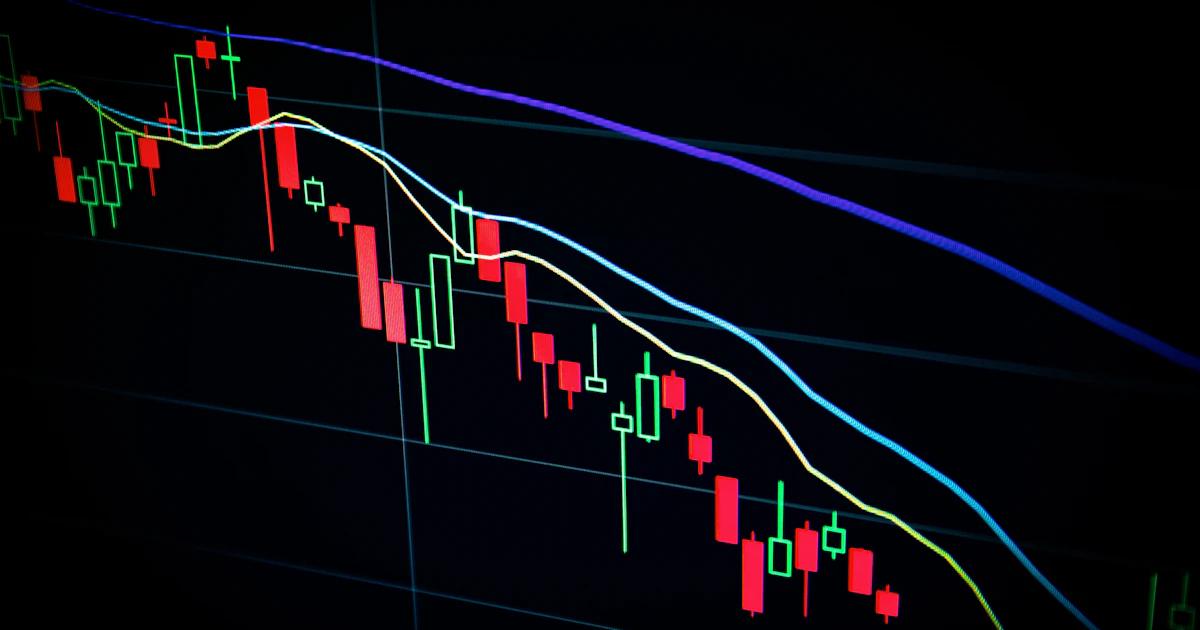
FOMO in trading — Fear Of Missing Out — is the impulse to enter a position because the price is moving and you don't want to be left behind, not because your setup criteria are met. It's one of the most documented causes of retail trading losses, and the data is unambiguous: trades taken out of FOMO perform significantly worse than planned trades across every market, every timeframe, and every experience level.
The problem isn't that FOMO traders lack knowledge about strategy. It's that in the moment, FOMO feels like conviction. "I'm sure this keeps going" sounds the same in your head whether it's based on analysis or fear. The only way to tell the difference is through retrospective data — which most retail traders never collect.
What does FOMO look like in real trading?
FOMO manifests in specific, recognizable patterns. If you've done any of the following, you've traded out of FOMO:
Chasing a pump. Bitcoin just moved 4% in an hour. You weren't in it. You open a position now because "it's going to keep going." You're buying after the move, not before it. The risk/reward ratio is poor from the moment you enter because you're far from any support level and close to where profit-takers will exit.
Entering late on a breakout. You had a breakout level marked. The price broke through it while you were at lunch. Instead of waiting for a retest, you enter at the current price because "it's confirmed." You're now entering three candles after the breakout, at a worse price and with a wider stop to make any sense.
Jumping into social media trades. Someone with 100,000 Twitter followers posts a chart and says this is about to go parabolic. You weren't watching this asset. You weren't in the analysis session. But you open a position anyway because the post has 2,000 likes and you don't want to miss the move.
Adding to a losing position. You entered a long and it moved against you. Instead of cutting the loss, you add more because "now the price is even better." The original FOMO trade becomes a larger FOMO trade.
All of these share one feature: the decision to trade was driven by the price moving, not by pre-existing analysis.
The data behind FOMO trades
The performance gap between emotional and planned trades is not subtle.
Win rate by emotional state at entry
The chart shows what the data consistently reveals: trades taken when the trader was confident or in a neutral state have a win rate above 80%. Trades taken out of FOMO have a win rate of 31%. Revenge trades — the close cousin of FOMO, taken after a loss to "get it back" — drop to 25%.
This isn't a sample of exceptional or failing traders. It's the average across accounts in the Tradalyst dataset. The emotional state at entry is one of the strongest predictors of trade outcome — stronger than which asset, which market condition, or which time of day.
The financial implication is significant. If your average winner is $200 and your average loss is $200 (a 1:1 ratio), a 31% win rate means you lose money on every ten FOMO trades by a net of -$780. A 83% win rate on the same average sizes produces +$1,260. The same capital, the same position sizes, a different emotional context — a $2,040 difference per ten trades.
5 signs you're trading out of FOMO right now
These are the observable signals that appear in the seconds before a FOMO trade is executed. If you recognize any of them while your cursor is hovering over the buy button, stop.
1. The setup wasn't in your watchlist before the price moved.
Every trade that didn't exist in your pre-session plan is, by definition, a reactive trade. This doesn't mean it's automatically a bad trade — but it means you need to evaluate it with extra scrutiny before executing. If the only reason you're looking at this asset is that the price started moving, that's the FOMO signal.
2. Your position size is larger than usual.
Increasing size because you "missed some of the move" and need to compensate, or because "this setup is so clear it deserves more" — both are emotional size escalation. Position size should be determined by your risk rules (e.g. 1% of capital), not by how convinced or excited you feel.
3. You're watching social media while you decide.
Twitter, Telegram, Discord, YouTube streams — any external signal telling you "this is going higher" while you make a decision is a source of FOMO noise. Professional traders make their trading plan before the market opens. What happens on social media during the session shouldn't affect a plan that already exists.
4. You don't have a stop loss defined before clicking.
If you don't know exactly where you'll exit if the trade goes wrong before you enter, you don't have a trade — you have a bet. A stop loss set after entry is one of the clearest indicators that the decision was impulsive, not analytical.
5. You feel physical urgency.
The sensation that if you don't enter in the next thirty seconds, you'll miss the whole move. That urgency is your limbic system responding to price movement, not a signal from your analysis. Valid setups don't disappear in thirty seconds. If yours does, it wasn't a valid setup — it was a price event you wanted to chase.

The FOMO trading cycle
FOMO rarely occurs in isolation. It tends to trigger a sequence of deteriorating decisions that compounds the initial damage.
The cycle works like this:
- You see a move you weren't positioned for → FOMO: you enter late
- The price reverses (you entered near the top of the move) → Loss, larger than normal because you had no stop defined
- The loss creates frustration → Revenge trade: you want to recover quickly
- The revenge trade uses more size and lower standards → Second loss, larger than the first
- You're now in a significant intraday drawdown → Psychological pressure that degrades every subsequent decision in the session
This is why single FOMO trades can turn into session-destroying runs. Each step in the cycle makes the next bad decision more likely. A loss from a FOMO trade plants the emotional seed for a revenge trade. A revenge loss amplifies the stress. The stress makes the next setup harder to evaluate objectively.
Breaking the cycle requires interrupting it at step one — before the initial FOMO trade is executed. Which is exactly what the protocol in the next section does.
A 3-step protocol to stop FOMO before you enter
This protocol works in real time — while you feel the urge and before you click.
Step 1 — STOP (60 seconds)
Before you do anything, set a 60-second timer and don't touch the keyboard or mouse. The goal isn't to analyze more — it's to break the automatic circuit between the impulse and the execution. In most cases, 60 seconds is enough for the urgency to drop from "I need to enter now" to "let me think about this." If after 60 seconds the urgency is still overwhelming, wait another 60 seconds.
Step 2 — ASK one question
"Was this setup in my plan before the price started moving?"
If yes: it may be a valid trade. Run your normal entry checklist.
If no: it's a reaction to the price, not a planned trade. Move to step 3.
Step 3 — RECORD instead of execute
Open your trading journal and write down what you're seeing: the asset, the current price level, why you think the move will continue, and what your planned entry level would have been had you identified this earlier. Don't enter the market.
This habit builds a secondary benefit over time. After tracking 30-40 "near-FOMO" setups this way, you'll have data on what percentage of those moves actually continued. The answer is almost always lower than your FOMO brain assumes. That data calibrates the fear — and calibrated fear is manageable.
How a trading journal helps identify FOMO patterns
The most powerful long-term tool against FOMO is a trading journal that captures emotional state at entry. Not after you know the result — in the moment, before the trade closes.
The practice is simple: every time you open a trade, tag it with how you felt when you entered. Options: confident, neutral, uncertain, FOMO, revenge, bored, anxious. After 40-50 trades, calculate your win rate by emotion tag.
For most traders who do this for the first time, the result is striking. The win rate gap between "confident" and "FOMO" entries is usually 30-50 percentage points. Seeing your own 23% FOMO win rate alongside your 71% confident win rate is a different experience from reading that FOMO is statistically bad. It's your money, your specific pattern, your trades.
That concreteness is what changes behavior. Abstract knowledge about FOMO doesn't stop FOMO trades. Your own data — specific, personal, tied to real losses — does.
See your win rate broken down by emotional state.
Analyze your trades freeFAQ
What is FOMO in trading?
FOMO in trading (Fear Of Missing Out) is the impulse to enter a position because the price is already moving and you don't want to miss the move — not because your setup criteria are met. It results in late entries with poor risk/reward ratios, undefined stop losses, and outsized position sizes. In trading data, FOMO-tagged trades consistently underperform planned trades by 30-50 percentage points in win rate.
How do I stop FOMO trading?
The most effective method combines a real-time protocol and measurement. The real-time protocol: pause 60 seconds, ask whether the setup was in your plan before the price moved, and if not — record it in your journal instead of executing. The measurement part: tag every trade with your emotional state at entry, then calculate win rate by tag. Seeing your own FOMO win rate in data form is more behavior-changing than any rule you write down.
Is FOMO trading always bad?
The data says yes, on average. FOMO trades — trades entered because a price is moving without pre-existing analysis — have consistently worse outcomes than planned trades. That said, some traders are capable of making fast reactive decisions that are technically sound. The question isn't whether you're capable in theory — it's whether your historical FOMO trades show a pattern of poor outcomes. If the data is bad, the behavior is costing you money regardless of how it feels in the moment.
What causes FOMO in trading?
FOMO is triggered by price movement that generates a fear of being excluded from gains. It's amplified by social proof (other people on social media are in the trade), recency bias (the last time you missed a move it went 20%), and loss aversion (the imagined pain of not being in a winner can temporarily outweigh the rational assessment of risk). It's a normal human response to market conditions — the goal isn't to eliminate it but to build a process that prevents acting on it.
How does FOMO affect trading performance?
FOMO affects performance through three specific mechanisms: it produces late entries with unfavorable risk/reward ratios, it generates larger-than-normal position sizes driven by emotional escalation, and it leads to poorly defined or absent stop losses. The compound effect is that FOMO trades not only have a lower win rate — they also produce larger losses when they fail. The combination of worse win rate and larger losses per losing trade creates a double-drag on overall account performance.
Conclusion
FOMO in trading is not a character flaw or a sign of inexperience — it's a predictable response to market conditions that every trader experiences. The difference between traders who are profitable and those who aren't isn't the absence of FOMO. It's whether they have a process that prevents acting on it.
That process has two parts: a real-time protocol that creates friction between the impulse and the execution, and a measurement system that makes the cost of FOMO visible in your own data. Neither part is complicated. Both require consistency.
If you've never calculated your win rate by emotional state, that's the first step. Everything else follows from having that number.
The journal that shows you what you can't see yourself.
Try Tradalyst freeRelated articles
The journal that spots what you can't see.
Try Tradalyst free