What Is Overtrading and Why More Trades Mean Lower Returns
Overtrading is one of the most silent account-killers in retail trading. More trades don't mean more profits — the data shows the exact opposite.
Tradalyst
10 April 2026
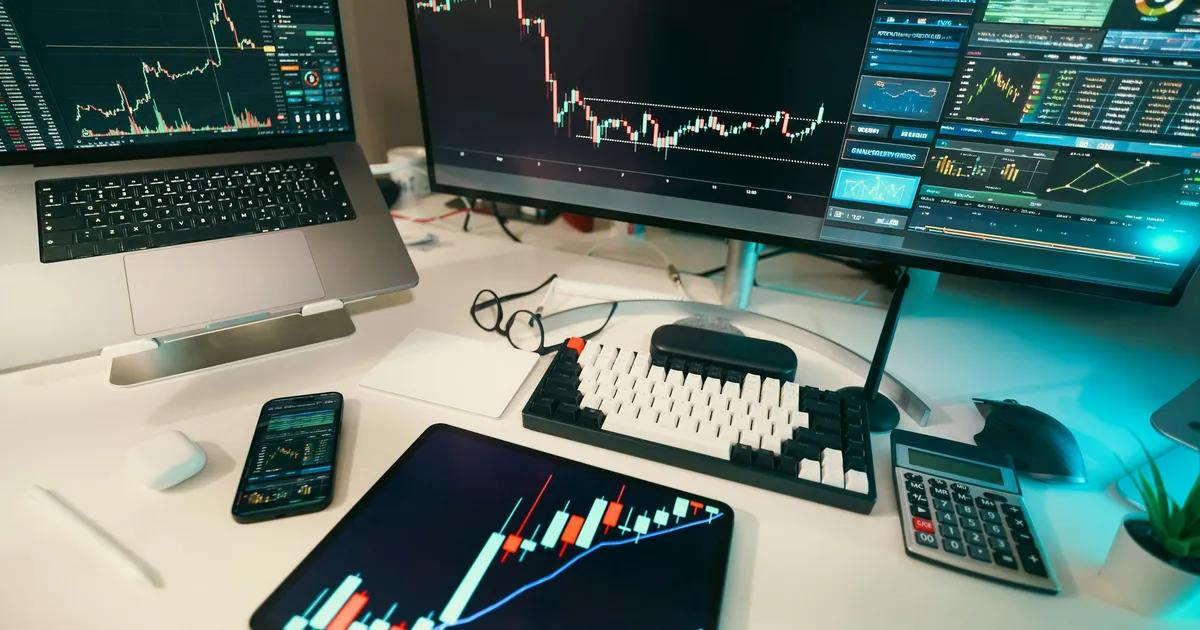
Overtrading is the habit of trading more than your analysis justifies — opening trades out of boredom, overconfidence, or simply because the market is open and you feel like you should be doing something.
It's the most silent account-killer in retail trading because it doesn't arrive as a single large loss. It arrives as accumulated commissions, mediocre decisions, and an equity curve that slowly deteriorates until you look at the numbers one day and can't figure out where the money went.
The story you tell yourself sounds reasonable enough: "I'm getting practice reps in," "there are opportunities in the market," "my system works, I just need more trades to prove it." All those stories have one thing in common: none of them survive contact with data.
The Technical Definition of Overtrading
Overtrading happens when your trading frequency exceeds what the quality of your setups justifies.
There's no magic number of daily trades that defines overtrading — it depends on your strategy. A futures scalper might take 40 trades in a day within their system. A swing trader taking 40 trades in a week is clearly overtrading if their strategy requires high-probability setups that take days to form.
The real signal isn't volume. It's the ratio of trades that genuinely met your defined criteria versus trades that "looked good in the moment."
If you review your history and more than 30-40% of your trades wouldn't have passed an honest pre-trade checklist, you have an overtrading problem.
Why It Happens
Overtrading has several distinct causes. Identifying which one applies to you completely changes the solution.
Boredom. The market is open for eight hours. Waiting for a high-probability setup can mean not trading for days. That silence generates discomfort — a feeling that you're "missing" the market while others are active. The response is to find something to do even when there's no technical reason to do it.
Overconfidence after a winning streak. After five or six consecutive winning trades, the brain starts seeing setups where there aren't any. Elevated confidence lowers the entry threshold — a setup you'd normally reject because it's "not quite right" now looks "good enough." Those marginal trades are where most of the streak's gains get returned.
Trying to recover losses. This variant overlaps most with revenge trading: after a loss, the urgency to recover it leads to trading more — sometimes in different instruments or timeframes you're not prepared for. Volume increases precisely when mental clarity is lowest.
Confusing activity with progress. Especially in traders at the learning stage, there's an implicit belief that more trades = more learning = faster improvement. The reality is that one bad trade, well-recorded and carefully reviewed, is worth more than ten mediocre trades without review.
Consistent execution — cumulative P&L
The Real Cost of Overtrading: Three Capital Destruction Channels
1. Commissions and Spreads
With forex spreads of 1-2 pips or stock commissions of 0.05-0.10%, the cost per trade seems trivial. But multiply by frequency.
A trader making 20 daily trades in forex with a 1.5-pip spread on 0.1 lots pays roughly £2.50 per trade — £50 per day, £1,000 per month, £12,000 per year in spreads alone. If their account is £10,000, they need a 120% return before costs just to break even after commissions.
The arithmetic of overtrading is relentless. The higher the frequency, the greater the percentage of capital transferred directly to the broker before any analytical decision has a chance to compensate for it.
2. Setup Quality Degradation
There is an inverse relationship between trading frequency and the average quality of those trades. When you have strict entry criteria, you only trade when all conditions align. If you introduce pressure to trade more frequently, the criteria relax — unconsciously at first, then deliberately.
Tradalyst data shows this pattern consistently: in accounts where weekly trade count significantly exceeds the trader's historical average, the win rate for that week falls by 8 to 15 percentage points. The degradation isn't random — it occurs precisely when frequency increases.
3. Decision Fatigue
Trading requires sustained attention. Every decision — enter, manage, exit — consumes cognitive resources that don't recover instantly.
A trader who has made 25 decisions in the last three hours is not in the same cognitive state as one who has made four. Research on decision fatigue shows that decisions made with depleted resources tend toward lower-effort options — which in trading usually means holding losing positions too long (avoiding the discomfort of closing) or exiting winners prematurely (securing the certainty of profit).
Overtrading doesn't just produce bad trades through poor setups — it produces bad decisions on trades that could have been good.
How to Tell If You Have an Overtrading Problem
Overtrading is easier to detect in hindsight than in the moment. Three diagnostic signals:
Signal 1: Your win rate drops when you trade more. Export your trade history, group by week, and correlate trade count with weekly win rate. If there's a negative correlation — more trades, lower win rate — you have documented overtrading.
Signal 2: A high proportion of your trades don't justify their entry. Review your last 30 trades and for each one ask: would it have passed my entry checklist if I'd applied it honestly before opening? If more than 25-30% answer "not clearly," you're overtrading.
Signal 3: You trade at times that weren't planned. If you have a session plan defining when and under what conditions you'll trade, how often do you abandon it mid-session? Off-plan trades are the most direct indicator of overtrading.
Win rate by emotional state at entry
Strategies to Reduce Overtrading
Set a daily trade limit and stick to it without exceptions. If your system requires high-probability setups, the reasonable limit is probably 2-4 trades per day. When you hit the limit, the session ends — regardless of what the market does afterwards. This limit forces prioritisation: if you can only take three trades, you only open the three best ones.
Create an entry checklist that must be passed before executing. "Looks like a good setup" isn't enough. The checklist must have binary, verifiable conditions: Is price at the level I marked last night? Does volume confirm the move? Is the risk/reward ratio greater than 1:2? Each condition must be answered yes or no before opening the position.
Record why you opened each trade, not just the outcome. In your trading journal, note the specific entry reason. After 20-30 trades, categorise them: planned setups, opportunistic setups, boredom setups, recovery setups. The patterns become immediately visible and the effect on behaviour is consistent.
Add deliberate friction to the entry process. Some traders use a two-minute timer they must let run before executing any order. Others require writing the justification before entering. The goal is to interrupt the impulse-execution cycle and give rational analysis time to intervene.
Review your high-frequency days. If on a Tuesday you traded twice your average, review that session in detail: what happened? What led you to trade more? What was the result of those additional trades compared to your average? This analysis turns overtrading from something vague into something measurable with concrete economic consequences.
How many of your trades were really necessary?
Analyse your trade history freeThe Difference Between a High-Frequency System and Overtrading
It's important to clarify: overtrading is not the same as trading frequently. A professional scalper taking 50 trades per day following a defined system, with consistent metrics and positive expectancy, is not overtrading.
The difference is whether there is a system generating those trades or a habit generating activity for its own sake.
A high-frequency system has:
- Explicit, verifiable entry criteria
- Positive expectancy documented in backtesting and live trading
- Consistent risk management per trade
- Stable performance metrics over time
Overtrading has:
- Entries based on feelings or "it seems to be moving"
- Win rate that varies significantly week to week
- Losses concentrated in high-frequency sessions
- Inability to identify, after the fact, why a trade was opened
If you're unsure which category applies to you, your trading journal data answers the question. If you don't have that data, that's the first problem to solve.
Frequently Asked Questions
How many trades per day is too many?
It depends on your strategy. For an intraday trader in stocks or forex with 15-60 minute setups, 3-6 trades per day is typically consistent with quality. For a swing trader, 1-3 trades per week may be correct. The question isn't the number — it's whether all those trades would have passed your entry criteria when they were opened.
Is overtrading always conscious?
No. Most overtrading happens without the trader recognising it in the moment. The rationalisation is instant: "this setup is solid," "the context has changed," "it's a valid exception." That's why retrospective journal analysis matters so much — the temporal distance lets you see what wasn't visible at the time.
How do I know if my system has positive expectancy or if I've just been lucky?
You need a minimum of 50-100 trades to start distinguishing real expectancy from statistical noise. Calculate your win rate, average win/loss ratio, and expectancy per trade (win rate × average win − loss rate × average loss). If expectancy is positive and stable across 100 trades, the system probably works. If it varies widely between 20-trade samples, the sample size is still insufficient or the system isn't consistent.
Conclusion
Overtrading is the silent tax that many traders pay without knowing it. It doesn't arrive as a single catastrophic trade — it arrives as the sum of hundreds of mediocre trades that erode capital and performance without there ever being a clear moment of "this is where it started."
The solution isn't to trade less through sheer willpower. It's to design an entry process that makes it structurally difficult to trade without sufficient reason: a daily limit, an entry checklist, a journal that records the justification for each trade.
When you have that data, overtrading shifts from a vague habit to a concrete number with a measurable economic cost. And at that point, it changes.
The journal that detects what you can't see.
Try Tradalyst freeRelated Articles
The journal that spots what you can't see.
Try Tradalyst free